The Benefits of Leadership Training: Why Organizations Can't Afford to Skip It
Only 19% of leaders are adept at reducing employee burnout, and just 26% have mastered developing middle performers into high performers. These gaps exist across organizations of all sizes, costing companies millions in lost productivity, turnover, and missed opportunities. But here's the ROI case: according to a Global Coaching Client Study by ICF, 86% of companies that could calculate ROI from leadership training reported at least making their investment back, with a median return of 700%. Companies with high leadership capabilities are 3.3 times more likely to be top financial performers.
The benefits of leadership training extend far beyond checking a professional development box. When done right, leadership development transforms organizational culture, drives measurable business success, and creates the kind of workplace where top talent chooses to stay and grow. Investing in leadership is a strategic move that drives long term success and performance. Participating in leadership training provides significant advantages that impact both personal career trajectories and organizational health.
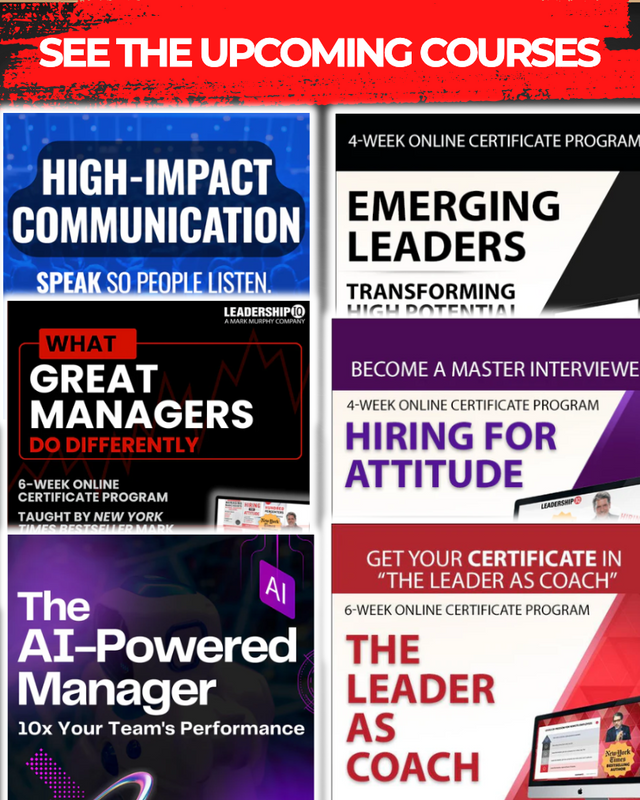
This guide covers the specific, research-backed benefits of leadership training for employees, managers, and organizations — plus how to design programs that deliver these results. If you're ready to start, explore Leadership IQ's training programs. For personalized development, consider executive coaching. Or bring these frameworks to your organization through a leadership keynote.

Why Leadership Training Is Important
The evidence is overwhelming: most managers simply aren't equipped with the skills they need to succeed. Only 29% of employees say they always know whether their performance is where it should be. When managers can't clearly articulate the difference between good work and great work, employees drift in uncertainty — they can't improve what they can't define.
Leadership training addresses this foundational issue by teaching managers to become effective teachers and coaches rather than just task delegators. The importance of leadership development becomes even more apparent when you examine the skills gap: only 43% of leaders are adept at delivering constructive feedback that changes behavior, and only 40% are highly skilled at setting inspiring goals or overcoming resistance to change. Leadership training bridges the gap between technical potential and actual performance by equipping individuals with soft skills.
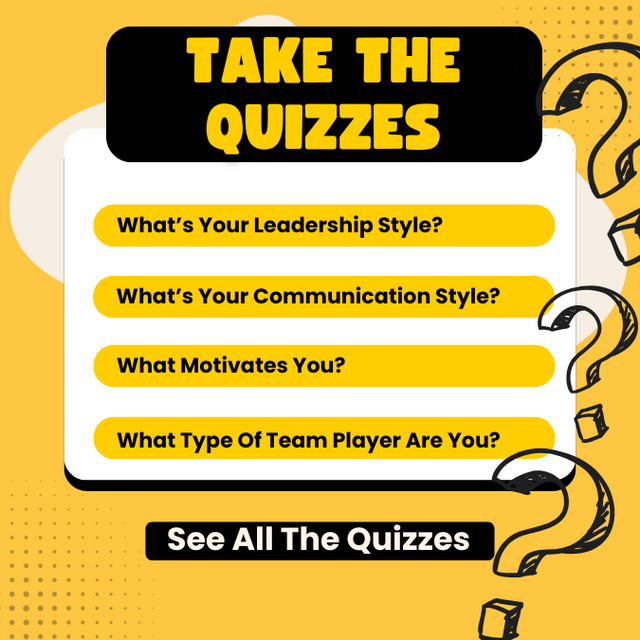
Discover your own leadership style and where training can make the biggest difference:
How Leadership Training Boosts Productivity and Business Success
Companies that prioritize leadership development see a significant increase in employee engagement, with Gallup research indicating that organizations with higher engagement levels experience 21% higher profitability and 17% higher productivity. Research indicates that organizations with strong leadership achieve double the EBITDA of those with weaker structures. Companies that prioritize leadership development can improve bottom-line financial performance by reducing costs, driving new revenue lines, and enhancing customer satisfaction.
The cascading effects on operational efficiency: trained leaders make faster decisions, escalate fewer issues, and resolve problems before they compound. When managers learn to respond constructively to employee problems, Leadership IQ found that employees are about 12 times more likely to recommend the company as a great employer. In a competitive talent market, that organic promotion of your workplace is invaluable.
Companies with strategic leadership development programs are able to respond rapidly to change, with 86% of such companies reporting effective responses compared to only 52% of those with less mature programs. Effective leadership is essential during critical times: drastic change, workforce reductions, corporate restructuring, and new competition.
Embed Effective Leadership Practices
Teach accountability frameworks that make expectations visible and measurable. Coach delegation and prioritization so leaders focus energy on the highest-impact activities instead of drowning in low-value tasks. Reinforce ethical decision-making — trained leaders model the work ethic and integrity that shape organizational culture from the top down.

Increase Employee Engagement and Employee Retention
Leadership training fosters a culture of engagement by providing employees with the tools they need to give and receive feedback, enhancing their sense of belonging and commitment. Leaders who recognize efforts and support professional growth boost team spirit, leading to increased job satisfaction and reduced employee turnover. Investing in leadership training not only develops future leaders but fosters a culture of trust and engagement, which is crucial for retaining talent.
Well-trained leaders create psychological safety that allows employees to share problems before they become crises. When managers know how to listen empathically and respond constructively, employees don't hide issues. This early warning system helps organizations address problems while they're still manageable.
Organizations see reduced employee turnover, improved employee engagement, and stronger internal promotion pipelines. Replacing a single employee can cost 50% to 200% of annual salary — which makes leadership training that improves retention one of the most cost effective investments an organization can make. Suggest recognition rituals to reinforce engagement: name the person, describe the behavior, explain the impact — weekly, consistently.
Build Emotional Intelligence to Become an Effective Leader
Leadership training enhances personal and professional development by fostering emotional intelligence, strategic thinking, and improved communication skills. Participants sharpen critical competencies such as strategic thinking, decision-making, and emotional intelligence. Emotional intelligence is one of the main personality traits that makes for a great leader — it involves being smart about emotions and using empathy effectively to empower and engage employees.
According to Daniel Goleman, emotional intelligence is critical to leadership success, helping leaders understand how emotions affect others and lead efficiently and considerately. Leadership training that encompasses emotional intelligence can significantly improve a leader's ability to motivate and engage their team, leading to better overall performance.
Teach self awareness skills: pause three times daily to name the emotion you're feeling before it affects your behavior. Teach empathy through role-play exercises: practice reading emotional situations before they escalate. Measure EI gains via 360 feedback. Link EI improvements to better decisions — leaders with higher emotional intelligence make calmer, more balanced choices under pressure.
Strengthen Effective Communication Skills
Effective communication skills are essential for leaders to articulate their vision, goals, and expectations clearly, fostering better collaboration. Improved communication can reduce misunderstandings and errors in a team setting. Leadership training programs help employees develop empathy, active listening, and problem solving skills, which are crucial for effective communication and relationship-building.
Teach Effective Communication
Train active listening techniques: paraphrase before responding, notice body language, resist solving problems before fully understanding them. Practice concise message framing using the FIRE framework (Facts, Interpretation, Reaction, End result). Coach nonverbal communication awareness — your tone and body language often communicate more than your words.
Improve Communication Skills Across Teams
Run cross-team communication workshops that address the specific barriers between departments. Deploy feedback loops after trainings — measure whether communication quality improves in practice, not just in workshop exercises. Track response-time improvements as a proxy for communication effectiveness. When team members communicate effectively, projects move faster, conflicts resolve sooner, and alignment with the company's vision strengthens.
Benefits for Employees and Organizations
The advantages create a compound effect. Leadership training teaches managers how to define performance standards clearly, eliminating confusion from ambiguous expectations. When employees understand exactly what great teamwork, accountability, or communication looks like, they deliver it consistently.
Customer satisfaction scores improve when employees work for trained leaders who create engaging, supportive environments. Engaged employees deliver better customer experiences, leading to increased loyalty and referrals. Innovation metrics improve because trained leaders create psychological safety that encourages employees to share ideas and take calculated risks. The compound effect creates organizations that consistently outperform competitors — a genuine competitive advantage.
Benefits for Managers Specifically
Managers experience profound benefits that extend beyond job performance. The confidence from having proven tools reduces the anxiety many managers feel facing difficult conversations. Leadership IQ research revealed that feedback delivery ranks among top sources of managerial stress — training that provides specific scripts and frameworks eliminates this uncertainty.
When managers master Word Pictures — clearly defining "Needs Work," "Good Work," and "Great Work" — they transform from unclear direction-givers into effective teachers. Trained managers report higher job satisfaction because they feel equipped to handle challenges. Instead of avoiding difficult conversations or hoping problems resolve themselves, they have confidence in their ability to address issues constructively. Nobody wants to be a bad manager — most managers struggle because they lack tools, not motivation.
The career opportunities are significant: managers who demonstrate strong leadership skills become candidates for advancement to leadership positions, while those lacking these competencies plateau. Leadership training prepares people for the next level, not just the current role.
Train Conflict Resolution to Protect Culture
Trained leaders use mediation techniques to settle disagreements fairly before they escalate into bigger challenges. Teach mediation techniques: separate the behavior from the person, find shared ground, agree on next steps, and follow up. Simulate workplace disputes in training so leaders practice before they face real stakes. Set escalation protocols post-training so everyone knows when to handle issues directly versus when to involve HR. Conflict resolution capability protects organizational culture by addressing friction before it becomes toxicity.
Importance of Leadership Development for Sustained Growth
Leadership development isn't a one-time investment — it's the foundation for sustainable organizational growth. Only 28% of leaders are adept at managing hybrid teams, and just 33% excel at managing remote employees. These gaps didn't exist a decade ago, but they're critical now. Organizations that invest in continuous leadership development create adaptive capacity — their managers anticipate change rather than scrambling to react.
Trained leaders become talent multipliers: they identify and develop high performers more effectively, creating a stronger bench of future leaders. This internal talent pipeline reduces expensive external hires and maintains cultural continuity. Leadership development programs are essential for succession planning, helping organizations prepare the next generation of leaders and ensure smooth transitions in leadership roles.
Design Development Programs for Current Leaders and Future Leaders
Map program tiers to leadership levels. Align curricula with strategic business goals. Effective leadership development programs must link to the organization's long-term vision and current market challenges.
Development Programs for Current Leaders
Offer coaching for situational leadership — adapting style to what each team member needs. Embed peer-support cohorts where current leaders share challenges and solutions. Schedule refreshers to sustain skills — without reinforcement, training benefits fade. Provide burnout prevention resources and offer peer coaching for current leaders. Measure leadership wellbeing quarterly.
Development Programs for Future Leaders
Run talent-spotting assessments to identify future leaders early. Deliver accelerator cohorts for high-potentials. Include mentorship pairings with executives. Nurturing future leaders requires a strategic approach to identify individuals with leadership potential and provide targeted training to develop their skill set. A growth mindset — the belief that leadership skills can be developed, not just inherited — is the foundation these programs build on.
Support Current Leaders to Sustain Change
The benefits of leadership training compound over time. Managers who receive consistent training become more confident, escalate fewer issues, and resolve problems faster. But without ongoing support, leaders revert to old habits. Strong leaders need continued development just as much as new ones — the challenges evolve, and so must the skills.
Measure Impact: Link Training to Business Success
Define KPIs tied to business outcomes: employee engagement scores, retention rates, feedback conversation frequency, team productivity, and customer satisfaction. Track employee retention and engagement metrics before and after training. Publish case studies showing ROI — the most compelling evidence combines numbers (engagement up 21%, turnover down 15%) with narratives showing how specific leaders applied new skills to produce measurable results.
The ultimate test isn't participant feedback or completion rates — it's measurable impact on business performance. Productivity gains, increased profitability, reduced employee turnover, improved customer satisfaction, and innovation metrics all connect directly to leadership quality. Investing in leadership development positively impacts every metric your organization cares about — and the data proves it.
Next Steps for Leadership IQ
Leadership IQ program bundles address the specific unique challenges your leaders face: from giving tough feedback without creating conflict to developing high performers to managing hybrid teams. Start with a diagnostic leadership assessment to identify your organization's biggest leadership gaps — then target training investment where it will produce the greatest return.
Whether you need a leadership course for team leaders stepping into their first management position, development programs for capable leaders ready to take on leadership positions, or organizational leadership training that boosts productivity and saves money through reduced turnover — the benefits of leadership training are measurable, compounding, and directly tied to overall success.
Start Experiencing These Benefits in Your Organization
Leadership IQ offers comprehensive leadership training programs that address the specific challenges your managers face every day. From effective leadership training on feedback delivery to conflict resolution to hybrid team management, our research-based approaches deliver measurable results — including increased productivity, increased job satisfaction, and a competitive advantage in retaining talent.
Explore Leadership IQ's training programs and discover how to transform your managers into the leaders your organization needs to thrive.
You can also explore executive coaching for personalized leadership development or bring these frameworks to your organization through a leadership keynote.